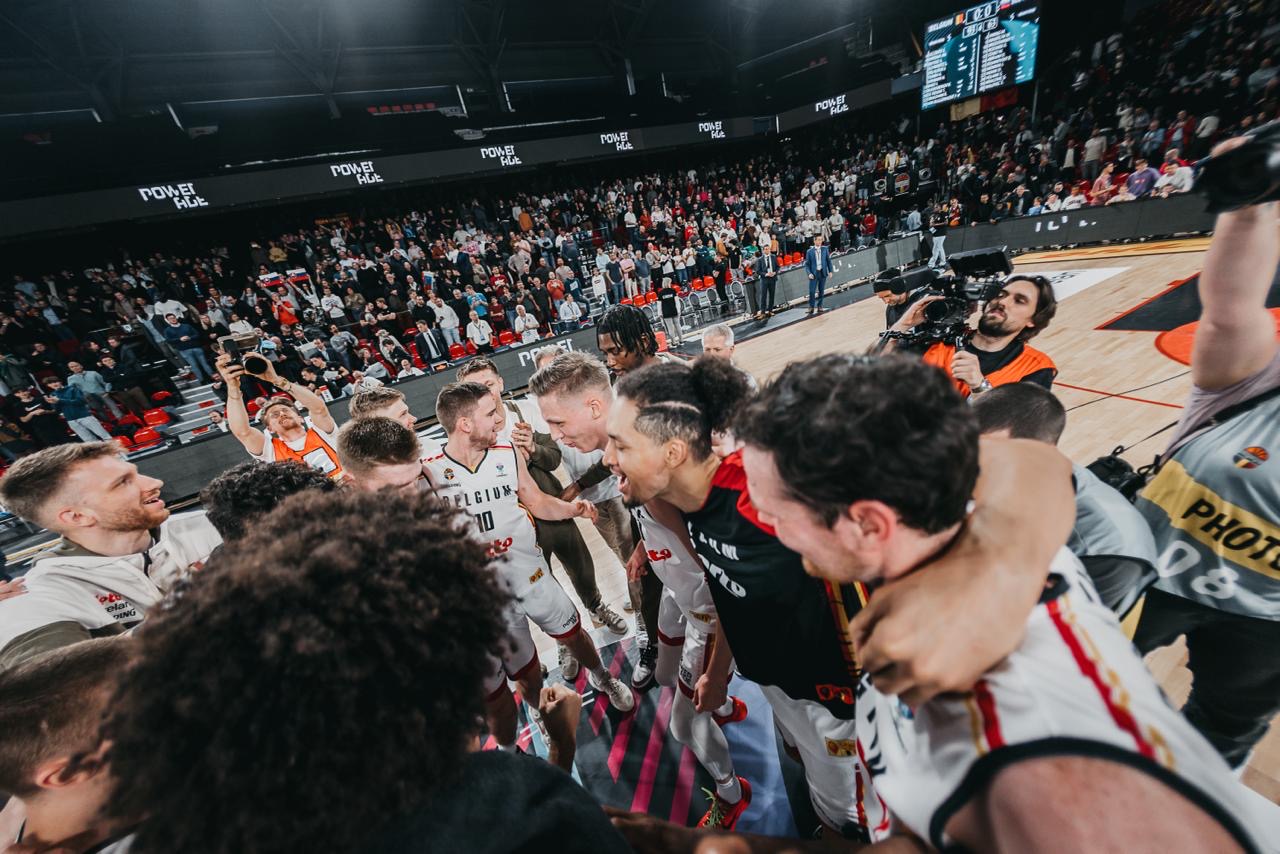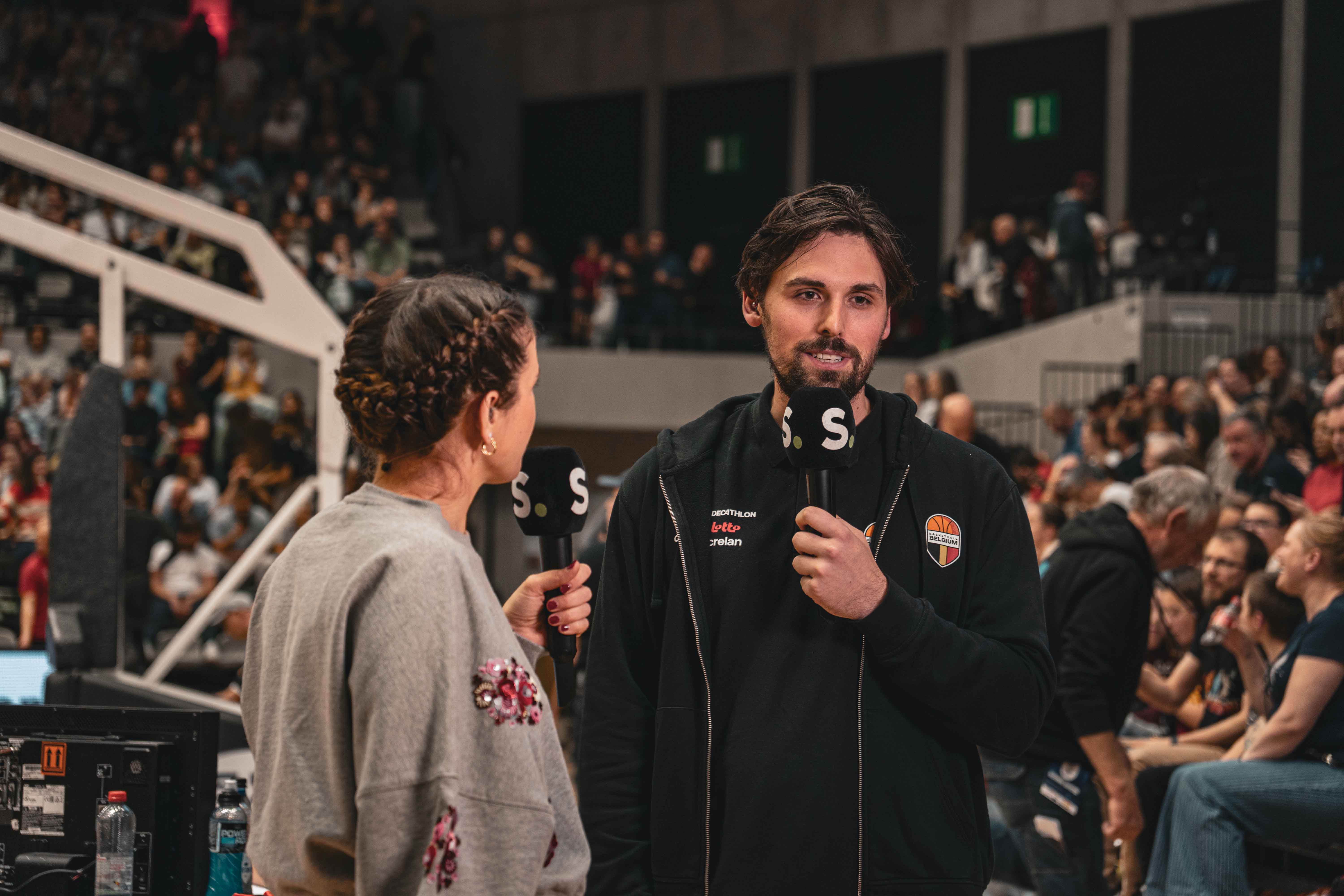
For over five years, I’ve had the privilege of working closely with Basketball Belgium—both Belgian Lions and Belgian Cats, both adults and youth.
From packed arenas and high-pressure tournaments to practices behind closed doors and unique behind-the-scenes moments, the experience has shaped not just my career, but the way I approach my work and life.
When you’re embedded in an elite environment long enough, patterns start to emerge. And the lessons are impossible to ignore. Here are seven lessons I’ve learned along the way.

I’ve had the unique experience and opportunity to work with some of basketball’s biggest athletes. Being around people like Emma Meesseman, Sam Van Rossom, Julie Allemand, Retin Obasohan and others on a daily basis, really opens up your eyes. Elite athletes operate differently.
They are deeply committed to their craft and things don’t happen by chance, they are earned. They’re all about professionalism and that’s something I tried to take away with my craft too. Excellence is expected. Room for error is small. These athletes notice details.
Working alongside them raises your own standard—whether you want it to or not.
The biggest takeaway? High-level athletes respect people who take their craft as seriously as they take theirs. You don’t need to be perfect—but you do need to be locked in.
At the national team level, everything moves fast—faster than you think you’re ready for. Schedules change last minute. You have to be flexible all the time. You have to improvise at moments you thought you planned out perfectly. You can make a whole plan, but eventually you’re not allowed on the team bus, so you have to adapt haha.
Practices end early. Athletes and coaches have moods and emotions. Media opportunities appear out of nowhere. Suddenly you have to deliver in minutes, not hours.
Working with the national teams taught me that speed isn’t about rushing—it’s about readiness. When your instincts are sharp and your workflow is efficient, speed becomes a natural byproduct.
Preparation isn’t just about knowing the schedule or charging your batteries. It’s about anticipating problems before they even exist. It sure helps that I have my own basketball background, so I kinda know how the basketball world works. Plus, windows and tournaments are really just a lot of repetition. Same programs, same routines. So you can prepare a lot of stuff in advance and figure out how everything is supposed to go. Of course, not everything goes as planned haha, see above.
Back in 2023, when we won our first gold medal with the Belgian Cats, we weren’t really prepared for all that. We weren’t immediately aware that we would be a part of history. Looking back on it, I regret not being a better storyteller back then, because they, the team, really deserved that. Fast forward to 2025, we won our second gold medal and something in my gut told me they were going back-to-back. When that happened, I was so so so soooooooo happy, because I was better prepared for this. We already made a few short episodes on YouTube, made a 65-minute documentary, filled 12 cinema halls, more than half a million people watched it live on TV, so bet preparation is key.
Being busy is not the same as being effective. You can do a lot of stuff, but not really go anywhere. In elite sports environments, every action has a purpose. Every shot or frame is with something in mind.
Working with intention means knowing why you’re creating something, not just whatyou’re creating. It means making choices instead of collecting content. It means quality over volume, clarity over noise.
When intention leads the process, the work becomes more impactful—and more meaningful.
High level sports also include failure. Of course I’ve made my fair share of mistakes. Things that didn’t work as expected or as I pictured them in my mind. As in basketball, shots miss, players get turnovers or execution is sloppy. What separates elite environments from average ones is not the absence of failure, but how quickly lessons are extracted from it.
Working with Cats & Lions normalized experimenting for me. Not everything lands—and that’s okay. What matters is reflection, adjustment, and moving on. Trying something bold and failing is infinitely more valuable than playing it safe and staying stagnant.
Within the national teams, I’ve worked with a LOT of people. And I can tell you, one thing that ALWAYS comes back as the key word is: COMMUNICATION.
In a high-level, high-pressure environment as the Cats and Lions, it’s even more important to communicate, communicate, communicate. With coaching staffs, team managers, medical staff, managament, players, co-workers, press officers,… Everyone needs to be on the same page. Trust me, I’ve worked in environments where it worked and some where it didn’t.
Clear communication is just as important as technical skill. Knowing when to speak, how to listen, and what not to say can make or break trust. For example, I gained the trust to be there in the locker rooms of tense moments as well. Right then and there it’s important to be a fly-on-the-wall and not attract attention.
The best communicators I’ve met are not the loudest—they’re the clearest. They ask questions. They respect boundaries. Good communication keeps everything moving forward. Poor communication creates friction no amount of talent can fix.
Talent might get you noticed—but persistence keeps you around.
Five years with national teams didn’t happen overnight. It was built through consistency, reliability, and showing up even when the work was hard, unglamorous, or unseen. Working hours at night, those nobody can see.
The lesson is simple: if you stay long enough, learn enough, and care enough, opportunities compound.